
Dunning
Remind your customers automatically of outstanding receivables and manage your individual multi-level dunning process.
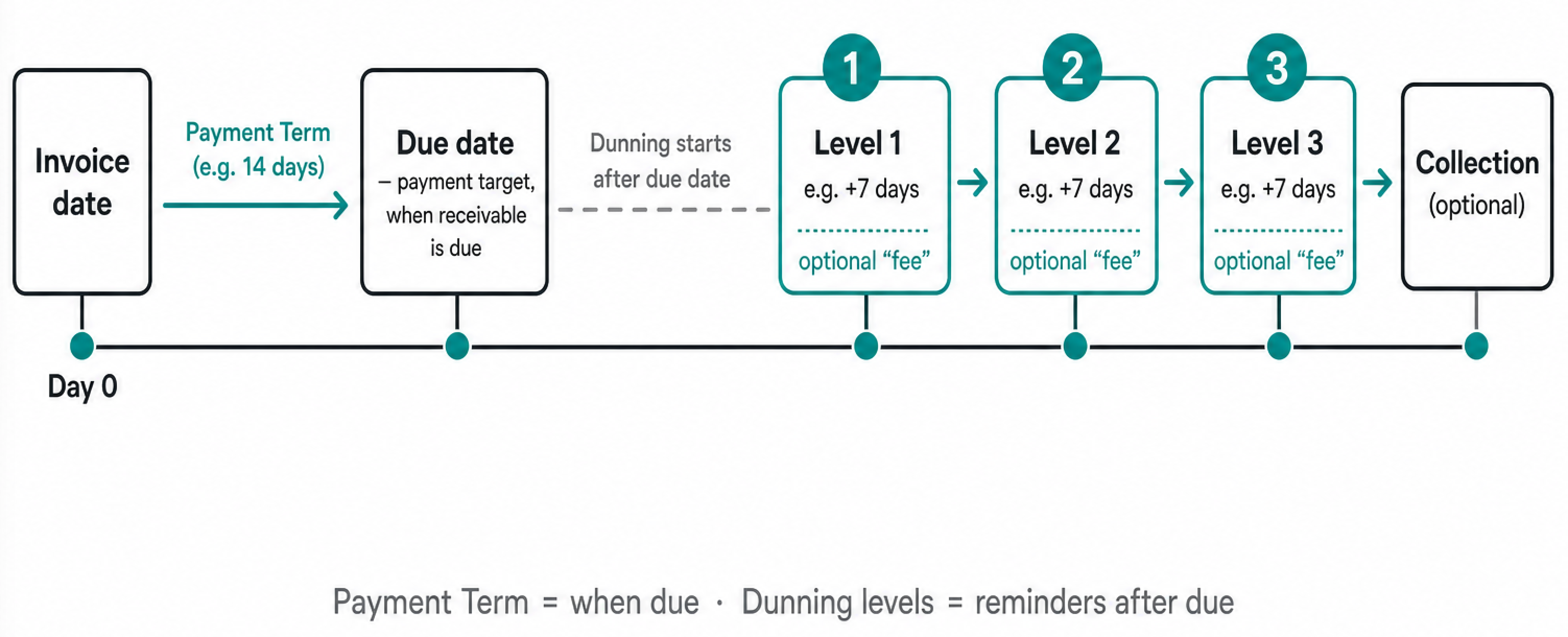
Dunning helps you remind customers of overdue receivables with a structured, multi-level process — from payment reminders through warnings to collection handover where configured.
instellix currently supports document-based dunning (the productive process for most tenants). In parallel, we are introducing a new OPOS Case–based dunning model that runs on open items cases instead of a single invoice timeline.
The dunning feature includes the automatic creation and sending of up to 4 consecutive dunning documents, which can be customized according to your company's design and requirements, e.g. payment reminder, 1st warning, 2nd warning, 3rd/last warning.
Define individual reminder intervals and specify after how many days after invoicing the respective dunning level should be initiated.
Which guide should I use?
| Guide | Status | Use when |
|---|---|---|
| Document-based Dunning | Available now | You configure and operate dunning today via Global > Dunning configuration |
| OPOS Case Dunning | In development | Preview of the new case-based model (published when generally available) |
What stays the same
- Goal: collect overdue receivables and reduce bad debt risk
- Multi-level reminders with company templates
- Coordination with payment collection (no dunning while a charge is still in progress)
- Due date remains the payment target of the invoice — see Payment Terms
What changes with OPOS Case Dunning
| Topic | Document-based (current) | OPOS Case (new) |
|---|---|---|
| Primary object | Invoice / document | OPOS Case |
| Planning | Tenant dunning levels | Dunning Plan snapshot per case |
| Execution | Document timeline | Dunning Actions + dunning job |
| Multi-document open items | Document-centric | Case can cover related open items |
| Fees / issued dunning | Limited / separate tracks | Case-level issued dunning and fees (feature rollout) |
Until your tenant is migrated, continue with Document-based Dunning.
Related articles
Updated about 2 months ago